
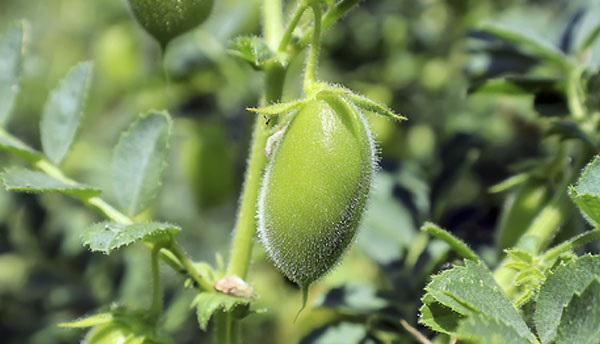
 Seed Coating with Arbuscular Mycorrhizal Fungi for Improved Production of Chickpea
Conclusions
The selection of AM fungal isolates that relates to host plant and crop growing conditions is essential to achieve good mycorrhizal efficiency and to obtain economical profits from crop productivity. Summarizing the main results obtained in this study, the application of multiple AM fungal isolates seemed to be a potential strategy to boost chickpea productivity, when compared to the inoculation of single AM isolate. Seed coating can be an appropriate tool to deliver AM fungi and the combined use of multiple isolates exhibited benefits for chickpea plants at different experimental scales, but the effect was especially relevant under field conditions. To our knowledge, this is the first field evidence of improved enhanced yield of chickpea inoculated with AM fungi via seed coating. Although greenhouse trials represent a prospective indication of microbial field-application potential, results are not necessarily representative in each case. In this sense, information provided by the combination of greenhouse and field trials is highly valuable and the simultaneous approach should be considered for further experimental designs. Integrating AM fungi into agricultural systems via seed coating in order to increase grain yield of crops is a potential valid approach for sustainable agriculture.
Thanks mdpi.com You can find the whole article and authors here.